

Building a home off-plan comes with a particular kind of excitement. Whether you are a first-time homebuyer, an experienced property investor exploring property investing, or a family taking the next step towards homeownership, choosing to buy off-plan allows you to watch your future home take shape from the ground up.
The first construction stage is about establishing the base on which everything else will depend. From setting out and foundations to concrete curing, backfilling and the surface bed, each step has a purpose: to help create a sound, sturdy modern home that is built to last.
As a buyer, you do not need to understand every technical detail or check each construction step yourself. This article explains what happens during the first stage of your home’s construction and how that work relates to the first progress payment from your bank. It will help you understand what has been completed when you are asked to authorise that payment. Although it is not necessary to become an expert, having a basic understanding of the work involved can be empowering and help you feel more comfortable throughout the build.
Before We Build, We Check
When you buy an off-plan home, construction progresses through different stages and inspections form an important part of that process.
Before construction gets properly underway, the stand is inspected. Different inspectors may become involved such as council inspectors, bank-appointed assessors and the National Home Builders Registration Council (NHBRC).
The NHBRC confirms that enrolled homes are inspected at key stages of construction, including the substructure or foundation stage, with a focus on compliance, structural strength and stability.
Once the required initial checks are completed and construction can proceed, the transformation begins. These inspections form an important part of the quality assurance process followed throughout the housing industry, helping ensure every home meets the required standards before construction progresses.
The First Step: Setting Out
This first step is when the position and footprint of the home are transferred from the approved plans onto the actual stand. Measurements matter enormously here because setting out establishes where the walls and foundations will eventually sit.
Think of it as drawing the first full-size outline of your home on the ground.
Once that positioning has been established, trenches can be excavated for the foundations.
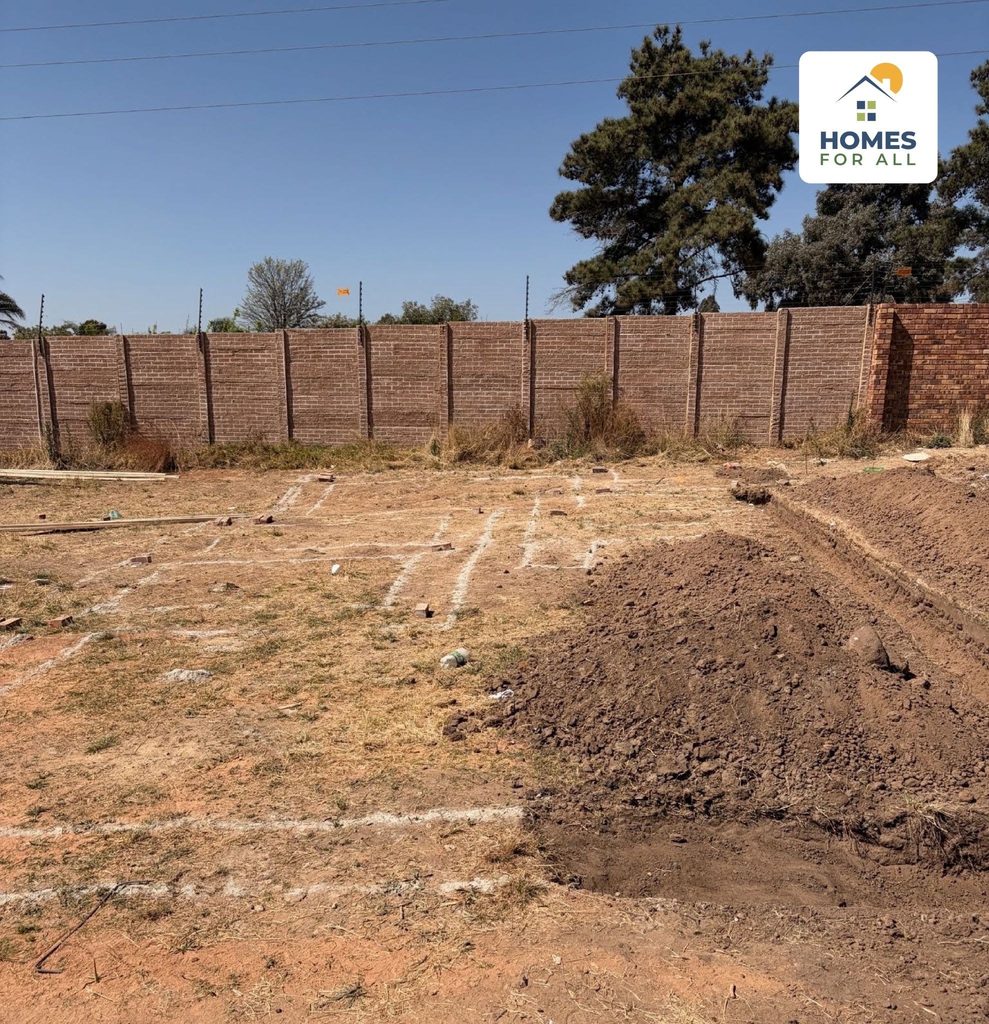
Setting out
Digging Down Before Building Up
Foundations may eventually disappear beneath the finished home but they perform one of its most important jobs: transferring the loads of the structure safely into the ground.
That is why the trenches are followed by steel fixing. Reinforcing steel is installed before concrete is cast into the foundation areas.
The combination of properly constructed foundations, reinforcement and concrete creates the strong base needed to support the structure above, helping to prevent excessive movement or structural distress.This is one part of building where rushing simply does not pay.
Strong foundations are one of the reasons reputable property developers and housing developers place so much emphasis on getting the earliest stages of construction right. Long before the finishes are installed, the strength of a home is already being built into the ground beneath it.
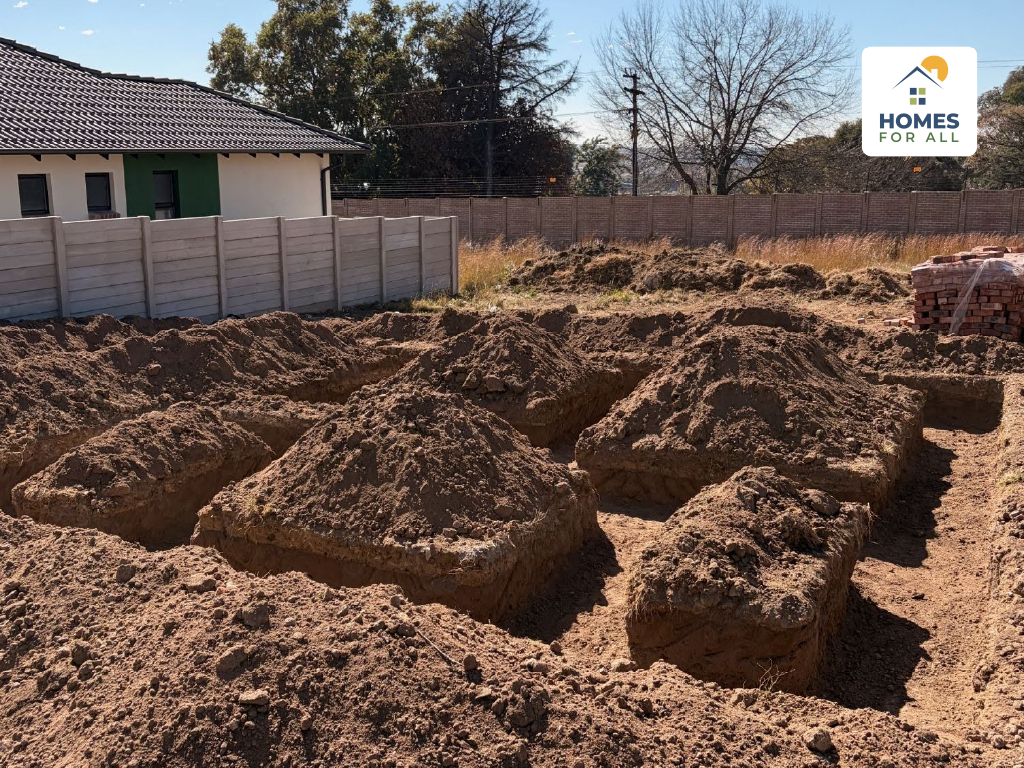
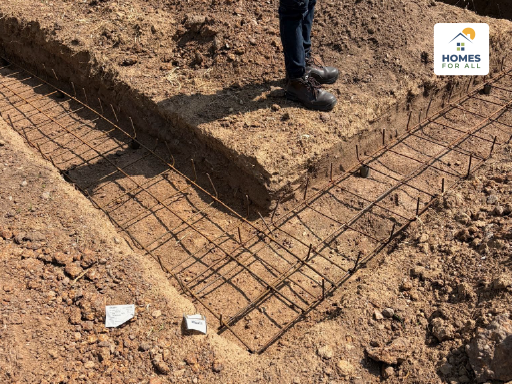
Foundation and steel
Then the Concrete Gets Time to Do Its Job
After the concrete footings have been cast, the concrete is allowed to cure for approximately 7-14 days. This allows the concrete to develop the necessary strength before the next stage of construction begins. From the outside, this can look like a period where not much is happening. In reality, it is an important part of the construction process.
In construction, progress is not always measured by how quickly something becomes visible. Sometimes, doing the job properly means giving materials the time they need.
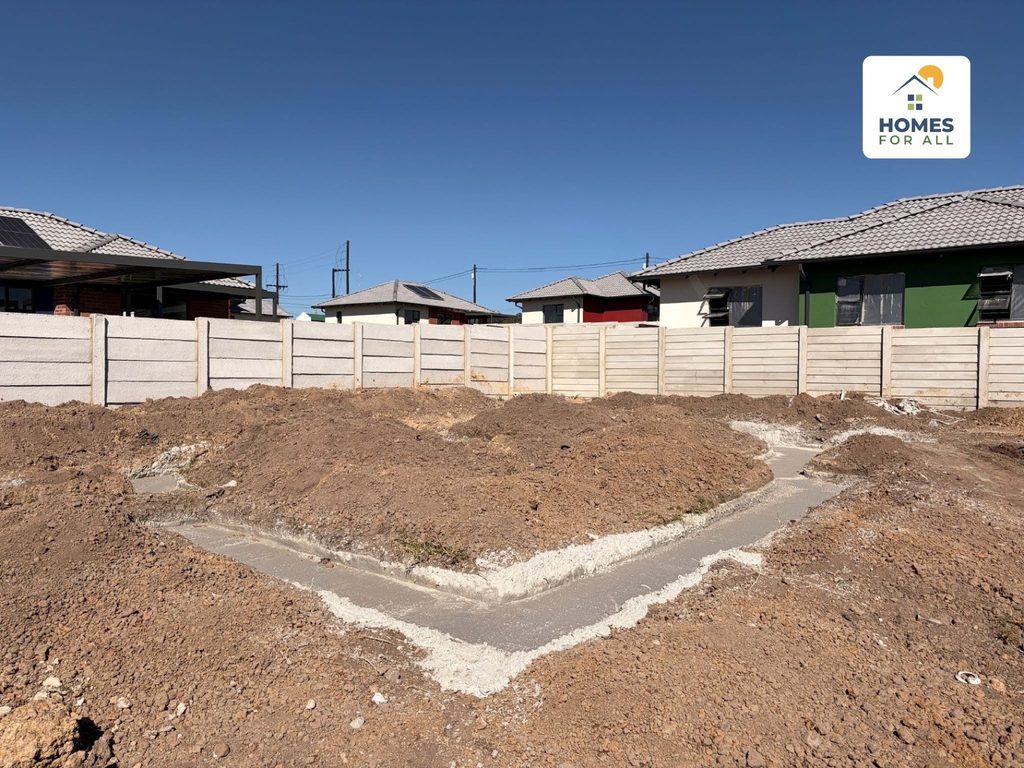
Concrete in foundations
Building the Home Back Up
Once the footing concrete has cured, brickwork begins at foundation level. This is known as building the plinth, which forms part of the substructure beneath the main walls of the home. The areas within the foundation walls are then backfilled and prepared for the next layers.
At this point, a pre-construction pest-control treatment is applied according to the development’s building requirements. A membrane is then installed to help create the necessary protective barrier beneath the floor structure.
Reinforcing mesh is then laid before the concrete surface bed is cast. Once this is complete, the first major construction milestone has been reached and the home is ready for the next phase of building.
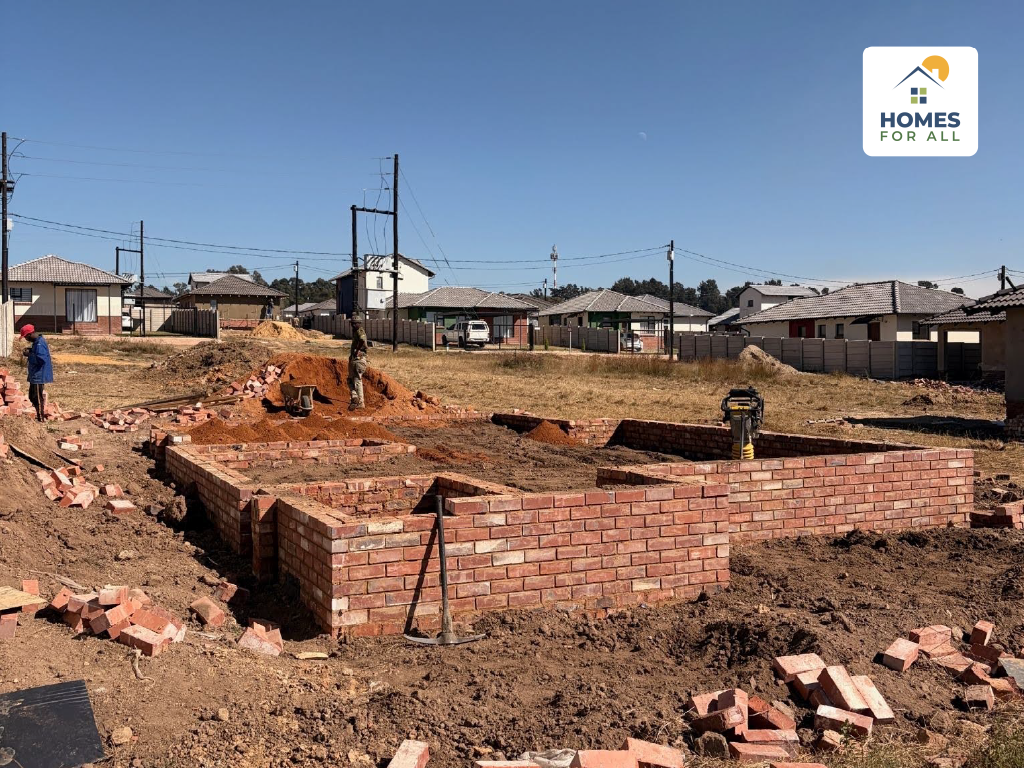
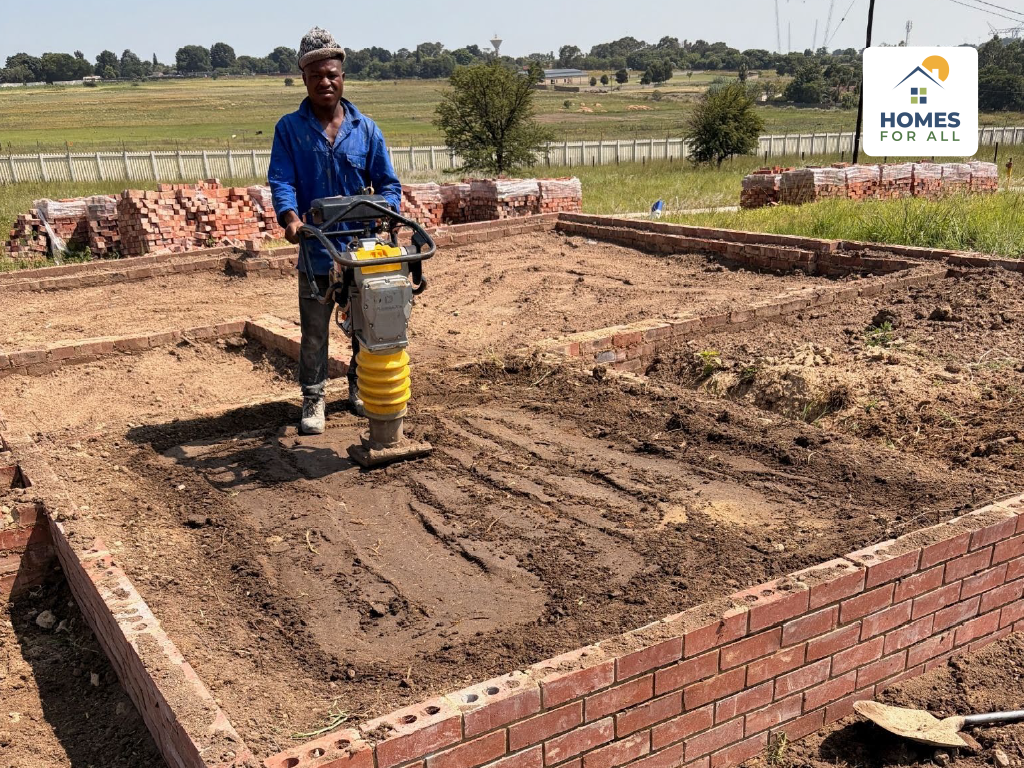
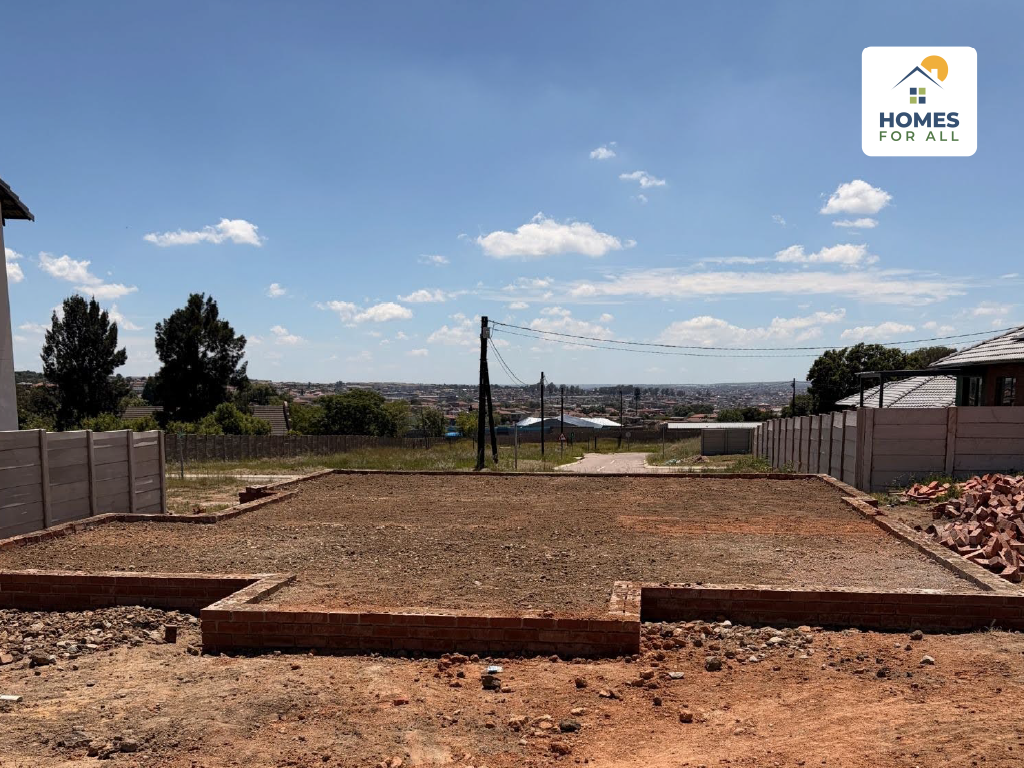
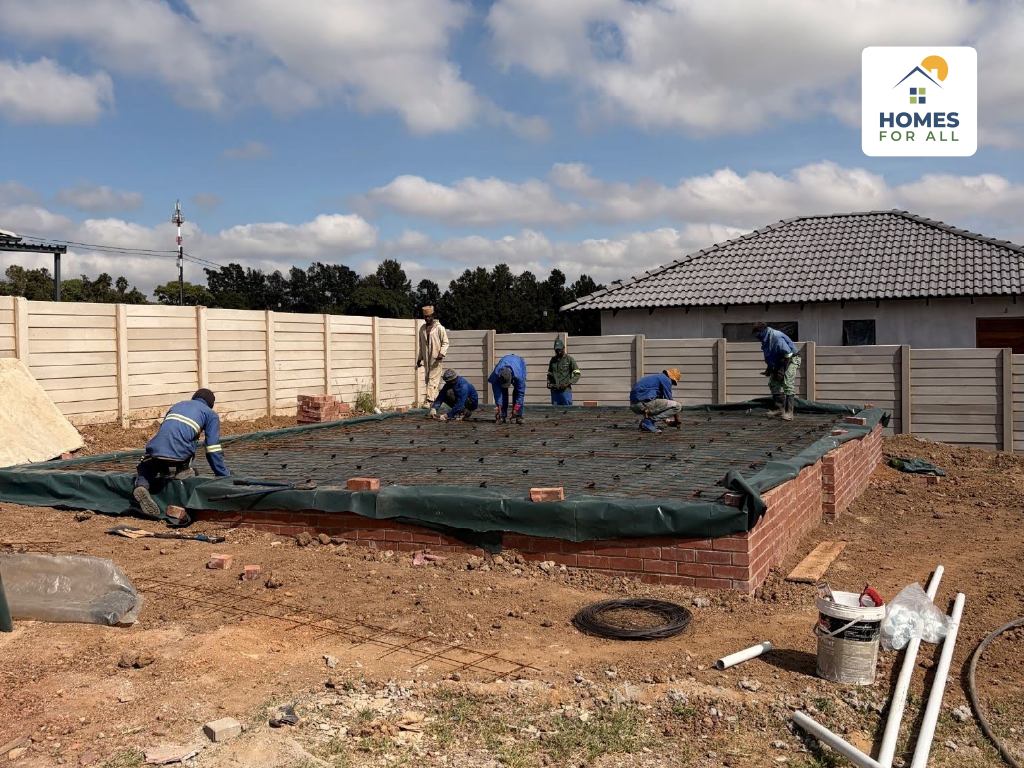
Plinth, backfilling and slab cast
The First Big Milestone
By this point in the build, a significant amount of work has been completed beneath what will eventually become the finished home. Before construction progresses, the necessary checks and inspections help confirm that the work completed at this stage meets the required standards. The appointed engineer or competent person provides the relevant technical and structural oversight, while the NHBRC conducts quality-assurance inspections at key stages of construction to check compliance with its technical requirements.
When the construction is financed by a building loan, the bank will generally appoint its own valuer or evaluator to visit the site. Their role is to assess the progress that has been made and confirm that the work associated with the requested progress payment has been completed.
Once the necessary checks, documentation and confirmations required by the bank are in place, the homebuyer is asked to authorise the progress payment. The bank can then release the relevant portion of the building loan to the developer.
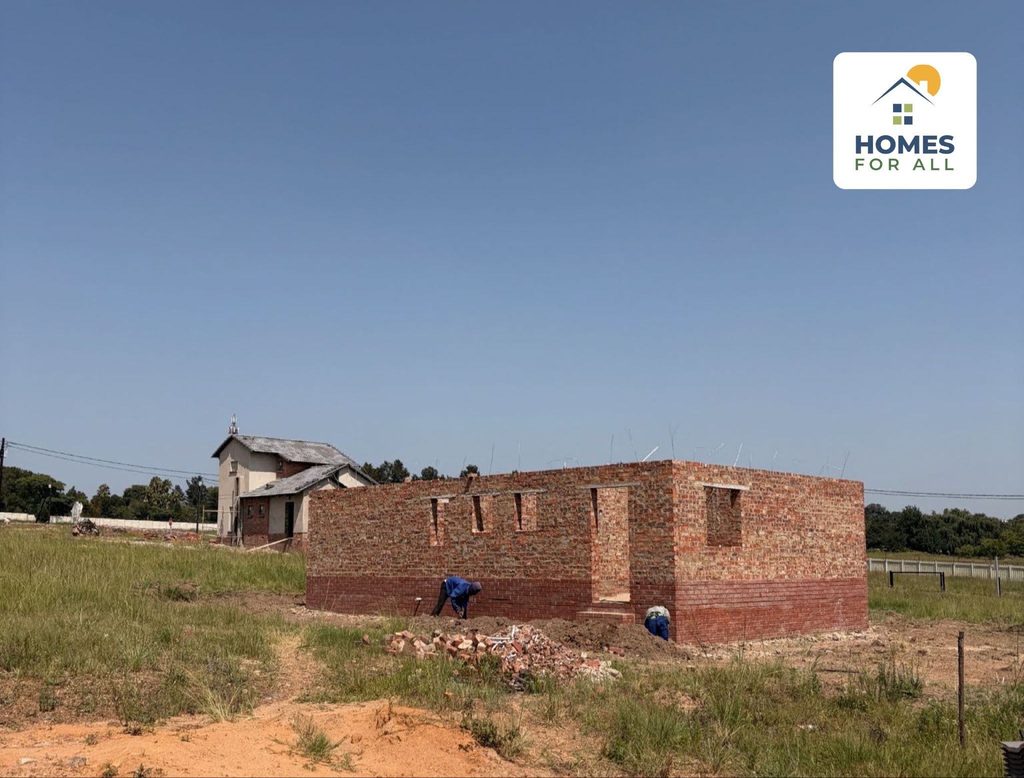
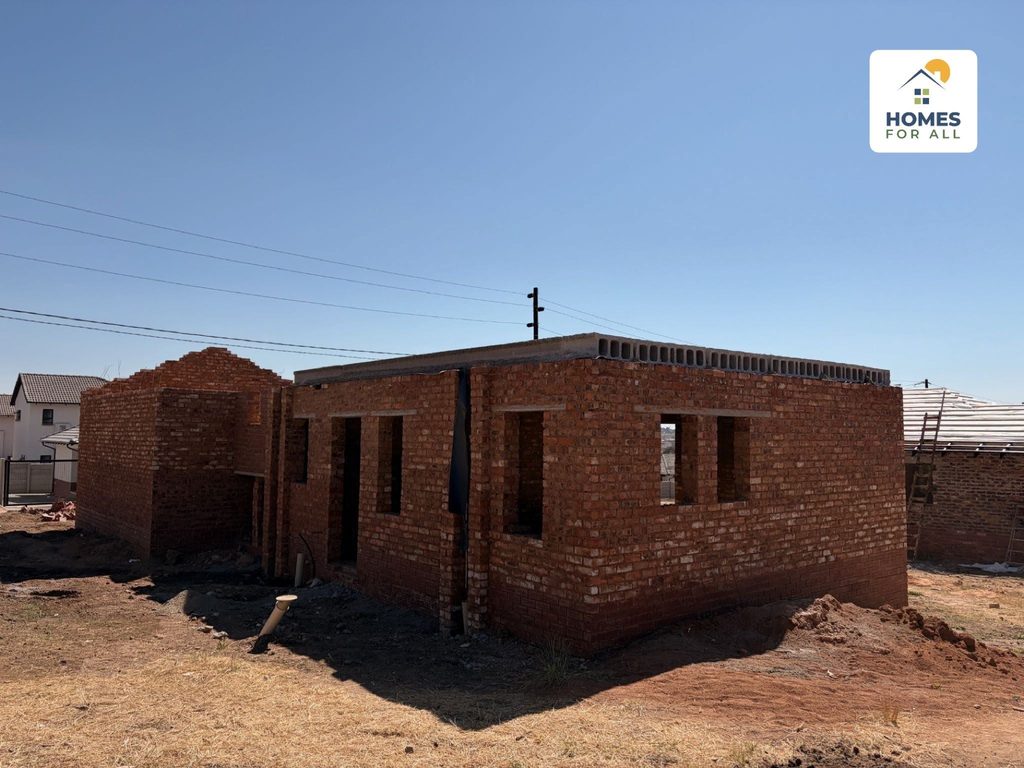
Brickwork to wallplate: single and double storey homes
For a single-storey home, this will be the 30% milestone payment. For double-storey homes, the brickwork to below the first floor slab will be the 15% milestone payment from the bank.
A Strong Home Starts With What You Cannot See
By the time you eventually walk across your finished floors, decorate the bedrooms and put the kettle on in your new kitchen, almost everything completed during this first construction stage will be hidden from view. That is exactly why it matters so much.
The trenches, reinforcement, concrete footings, curing time, plinth, backfill, protective layers, reinforcing mesh and surface bed are not the glamorous parts of building a home. They are the parts that make the glamorous parts possible.
At Homes For All, each construction stage builds on the one before it. Before your home starts taking shape above ground, we give the work beneath it the attention it deserves.
You do not need to know every construction detail to appreciate what this milestone represents: a sound base for your future home. Understanding how it relates to your first progress payment helps you know what to expect as your build moves forward.
If you’re ready to take the next step, have a look at Homes For All and buy a home off-plan across our property developments. You might find Paperbark Estate a secure and modern starting point, while Blue Vista offers great entry-level homes. Presidents Place stands out for its convenient location and spacious layouts.
These – and all our other property developments – aim to make the dream of owning a home more accessible. Exploring these sites could be the first move towards finding a home that comfortably suits your budget and your family’s future.
Speak to a member of our team to find out more.
Email: sales@homesforall.co.za
Facebook – https://www.facebook.com/Homesforalll/
Instagram – https://shrturl.app/U5gWJT
WhatsApp – +27 82 721 2570
Homes For All holds a Fidelity Fund Certificate issued by the Property Practitioners Regulatory Authority (PPRA)
Author: Twaambo Chirwa
